
Barcelona is often described as a Mediterranean city shaped by design, trade, and culture. In reality, it is a layered city, rebuilt again and again after conquest, collapse, reform, and reinvention. This timeline traces how Barcelona evolved, not as a straight line of progress, but as a sequence of ruptures, adaptations, and quiet survivals that still echo in its streets. Pictured above: the 2000-year-old Temple of Augustus at Carrer del Paradís, 10, in the Gothic Quarter,
c. 100 BC – Roman Foundations: Barcino Is Born
***
The Romans establish Colonia Iulia Augusta Faventia Paterna Barcino, a small fortified settlement on Mont Tàber. Though modest compared to Tarraco (now Tarragona), Barcino is strategically placed between trade routes and protected by thick defensive walls. Its grid layout, forum, and temples form the first urban blueprint of Barcelona, one still traceable today in the Gothic Quarter’s street pattern.
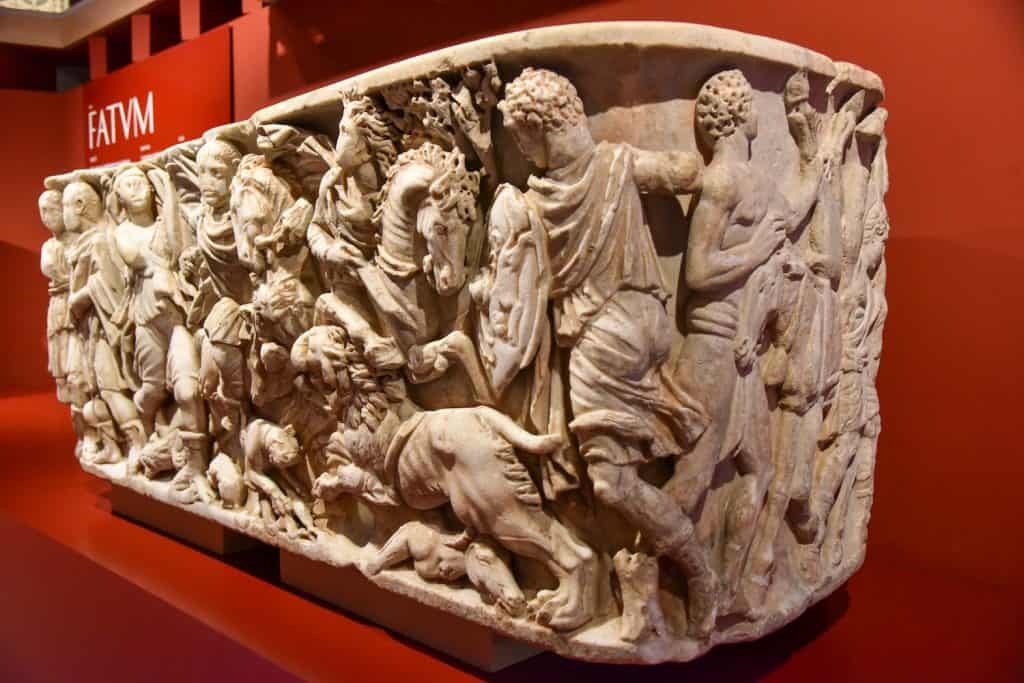
Above: Sarcophagus depicting a lion hunt, dating from 3rd century AD and discovered in Barcelona. (Catalan Museum of Archeology.)
5th–8th Centuries – Visigoths and Uncertainty
***
After the fall of the Roman Empire, Visigothic rulers take control. Barcelona briefly serves as a royal seat, but political instability and limited resources slow urban growth. Roman structures are reused rather than replaced, embedding the city’s habit of building forward without erasing the past.
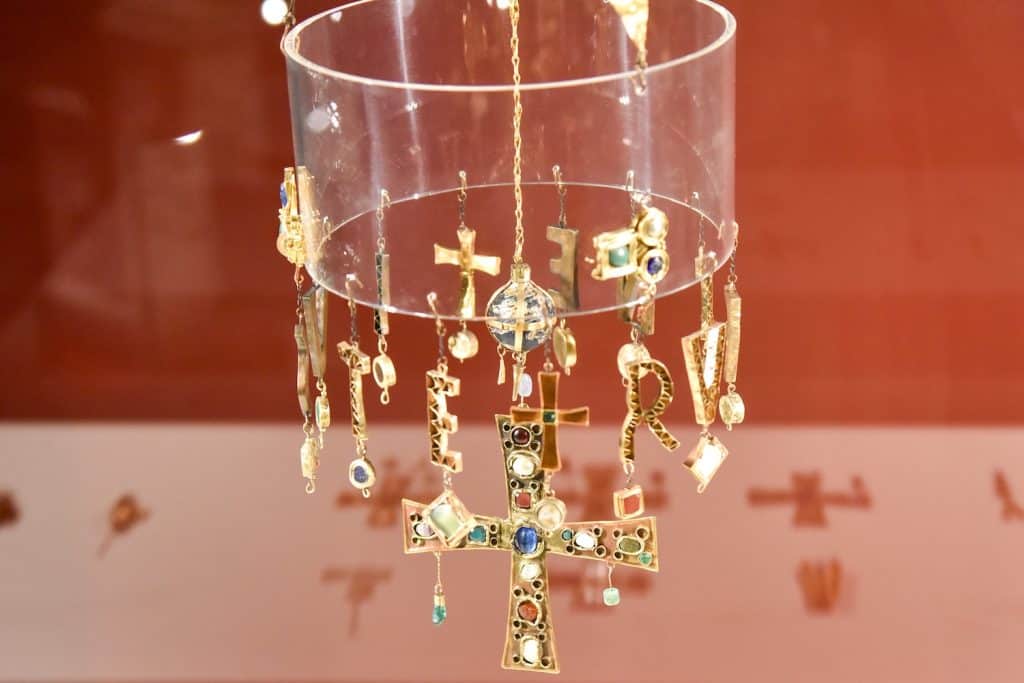
Above: The Visigothic votive crown on display at the Barcelona Museum of Archeology formed part of the Treasure of Torredonjimeno, discovered in an olive grove in Jaén in 1926. Dating from the seventh century, the richly decorated crown was designed to hang above a church altar rather than to be worn.
711–720s – Muslim Conquest and Al-Andalus Reaches Barcelona
***
Following the collapse of Visigothic rule, Umayyad forces led by Tariq ibn Ziyad brought most of Iberia under Muslim control, forming Al-Andalus. Barcelona was taken around 719 and functioned briefly as a northern frontier city, where existing elites, laws, and Christian communities were often left intact under negotiated rule.
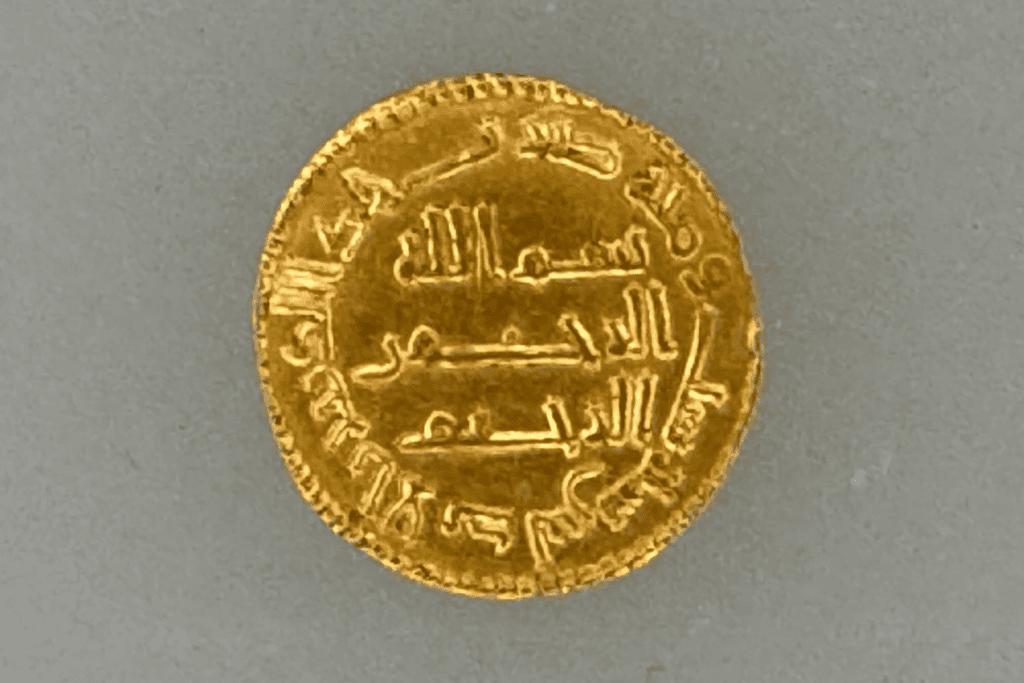
Pictured above: a gold dinar from Al-Andalus, dating to the 7th or 8th century, from the MUHBA Plaça del Rei collection.
***
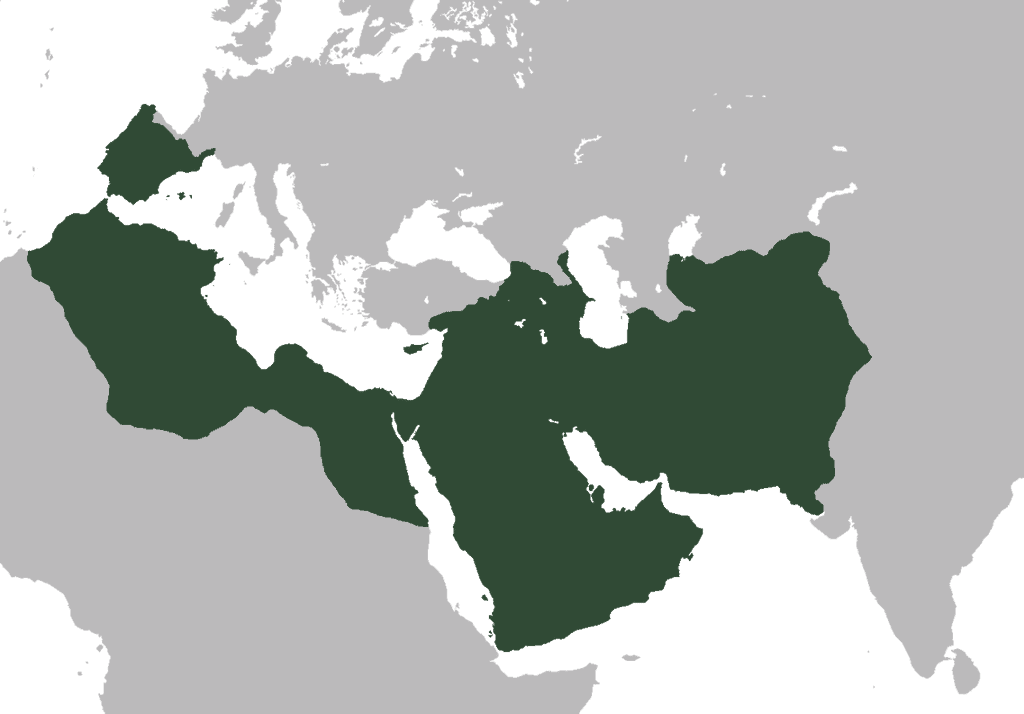
Above: The territory of the Umayyad Caliphate, around 705 AD, stretching from the Iberian Peninsula in the west to Cental Asia in the east. The capital was Damascus, in present-day Syria, from 661 to 744. (Image: Kaiser&Augstus&Imperator/Wikimedia Commons, licensed under CC BY-SA 4.0.)
801 – Carolingian Conquest and the Spanish March
***
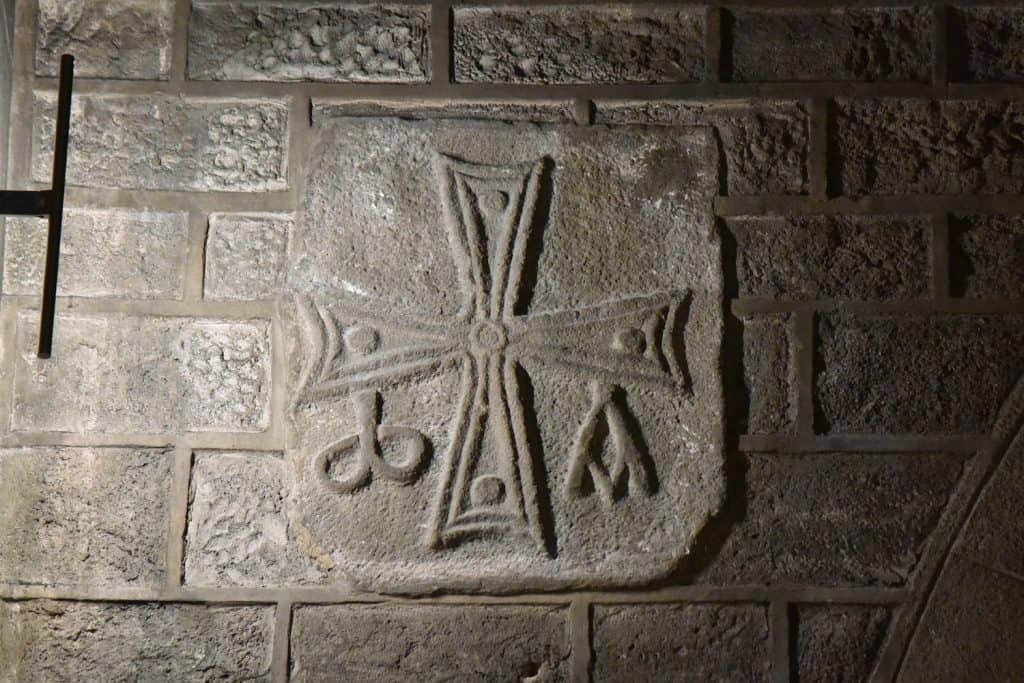
Frankish forces capture Barcelona from Muslim rule, turning it into a frontier city of the Carolingian Empire. The County of Barcelona emerges, gradually gaining autonomy. Defensive concerns dominate urban life, reinforcing walls and compact density that will define medieval Barcelona.
The image above depicts the Alpha and Omega Reliefs at the Monastery of Sant Pere de les Puel·les. These ancient Christian carvings are said to have been established following the Carolingian conquest of Barcelona in 801. Although their exact date is uncertain and they may be older, they provide a rare physical link to the religious landscape of Barcelona around the beginning of Carolingian rule. Alpha and Omega are Christian symbols representing Christ as the beginning and end of all things. Alpha is the first letter of the Greek alphabet and Omega the last.
10th–13th Centuries – A Mediterranean Power

***
Barcelona flourishes as a commercial and maritime hub within the Crown of Aragon. Trade networks stretch across the Mediterranean, and wealth fuels the construction of Gothic churches, palaces, and civic buildings. This is the era that gives Barcelona much of its medieval architectural soul.
***
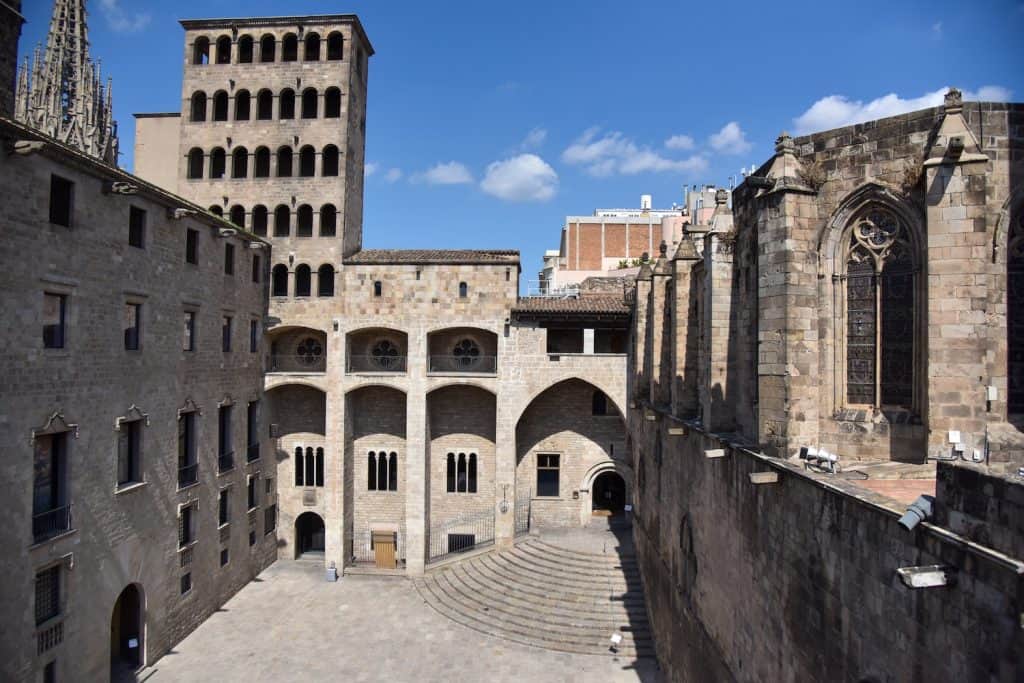
Barcelona was the primary residence of the counts of Barcelona and often the Kings of Aragon, as well as one of the Crown’s major commercial and administraive centers. The Palau Reial Major in what is now Plaça del Rei (above) was the principle royal palace in medieval Barcelona. But Zaragosa was the capital of the Kingdom of Aragon.
***
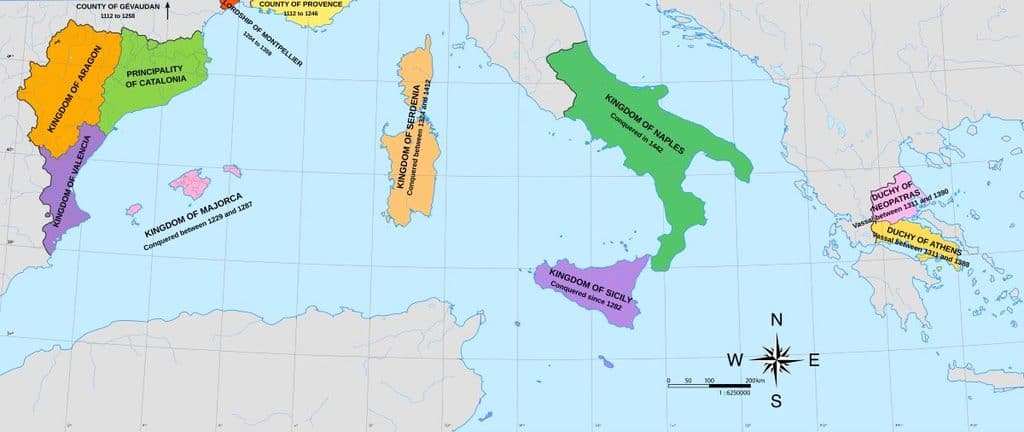
Above: A map showing the different territories controled by the Crown of Aragon (although not all of the above were held at the same time). At its peak, it controlled territories across the Western Mediterranean, including parts of present-day Spain, Southern France, Italy and Greece. The Kingdom of Aragon was one of the territories that formed the larger Crown of Aragon. (Image: Milenioscuro and MS Sakib/Wikimedia Commons, licenced under, CC BY-SA 4.0.)

14th–15th Centuries – Crisis and Decline
Plague, famine, and political conflict weaken the city. Trade declines, population shrinks, and Barcelona loses influence as power shifts elsewhere in the Iberian Peninsula. Despite stagnation, the urban fabric remains largely intact, preserving medieval density rather than modernizing it.
1714 – Defeat and Centralization
***
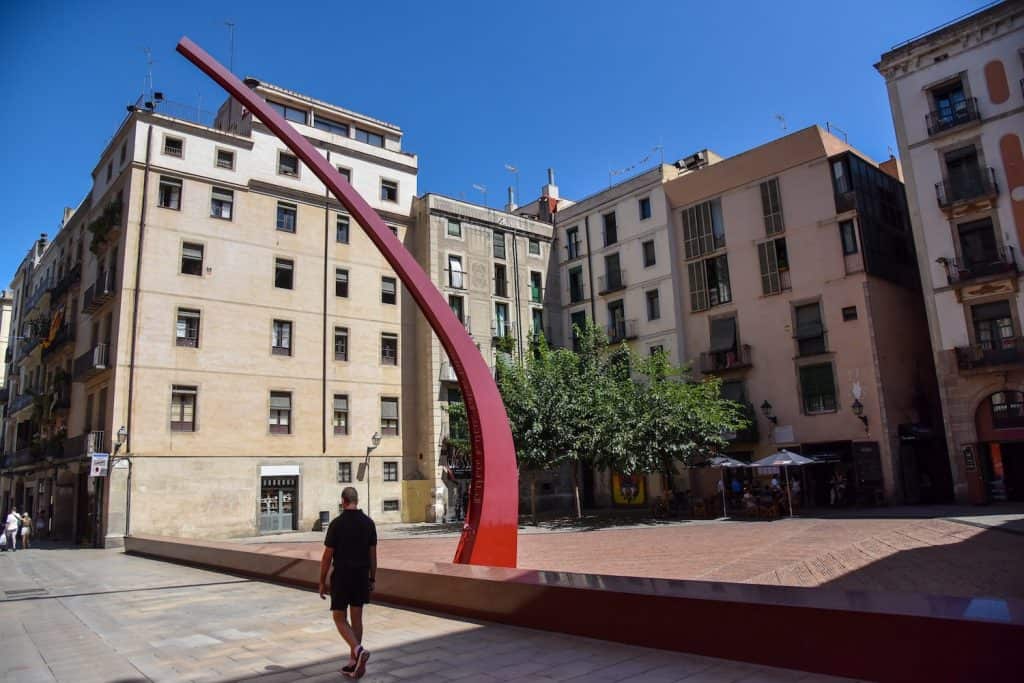
After the War of the Spanish Succession, Barcelona falls to Bourbon forces. Catalan institutions are abolished, and a massive military citadel is built to control the city on the land which is now Parc de la Ciutadella. The defeat of 1714 becomes a foundational trauma, shaping political memory, identity, and later commemorations.
The Fossar de les Moreres (above) is a memorial square beside the Basilica de Santa Maria del Mar in El Born. It marks the site of a cemetery where defenders of Barcelona who died during the Siege of 1714 are believed to be buried. The square features a striking steel memorial with an eternal flame, symbolizing rememberance of those who died defending the city. It is an important site of commemoration, particularly on La Diada, Catalonia’s national day, on the 11th of September.
1760s–1800 – Controlled Growth Beyond the Walls
Economic recovery begins under strict royal oversight. While the city remains constrained by fortifications, proto-industrial activity grows. Pressure builds for expansion, setting the stage for a radical urban transformation.
1859 – The Eixample Plan Changes Everything
***
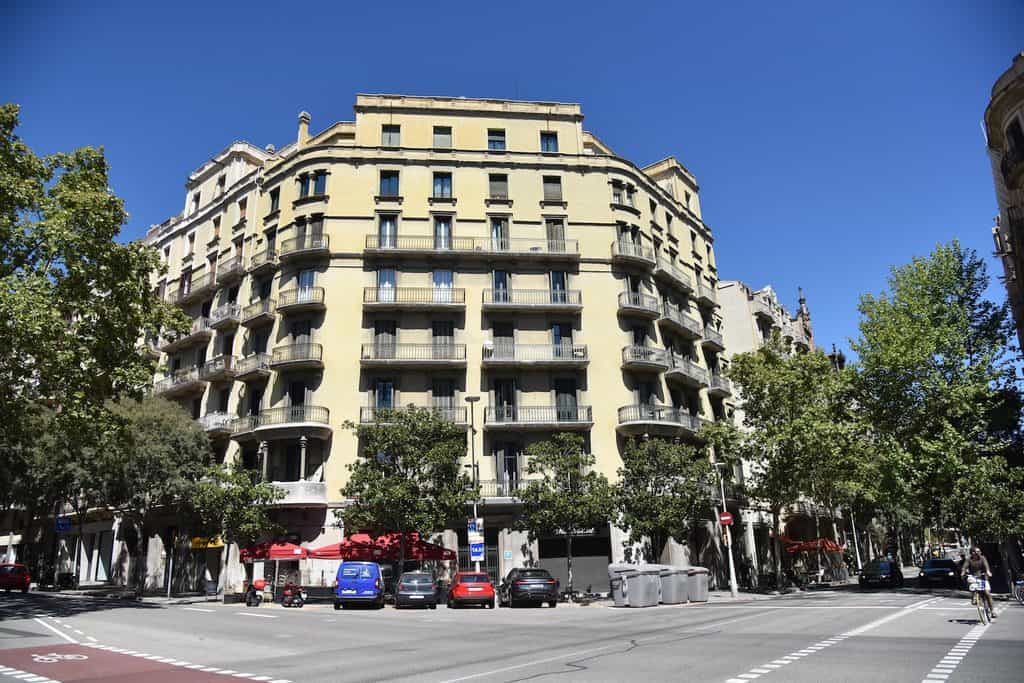
With the demolition of the city walls, engineer Ildefons Cerdà designs the Eixample, a rational grid intended to improve health, mobility, and equality. Though later distorted by speculation, the plan reshapes Barcelona into a modern city.
Above: Carrer Mallorca and Roger de Lluria in the heart of Eixample. The distinctive chamfered corners, known as xamfrans, were designed to bring more natural light and ventilation into surrounding apartments, while also creating spacious, open intersections.
Late 19th – Early 20th Century – Industrialization and Modernisme

***
Factories spread, workers arrive, and social tensions rise. At the same time, Modernisme flourishes, blending nationalism, art, and architecture. Barcelona becomes both a laboratory of creativity and a hotspot of unrest, with strikes, anarchist movements, and sharp class divides shaping daily life.
1936–1939 – Civil War and Devastation
***
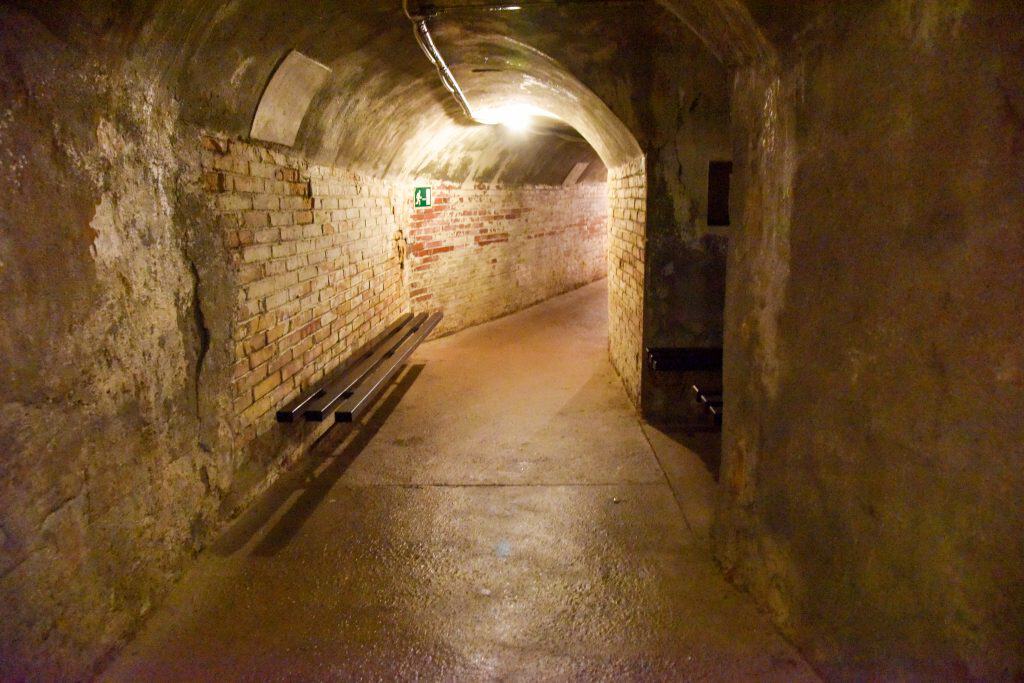
During the Spanish Civil War, Barcelona stands as a Republican stronghold. Aerial bombings target civilians, leaving deep physical and psychological scars. Air-raid shelters, rationing, and political repression mark a city under siege. Above: Refugi 307 in Poble Sec, one of Barcelona’s best preserved Civil War air-raid shelters.
***
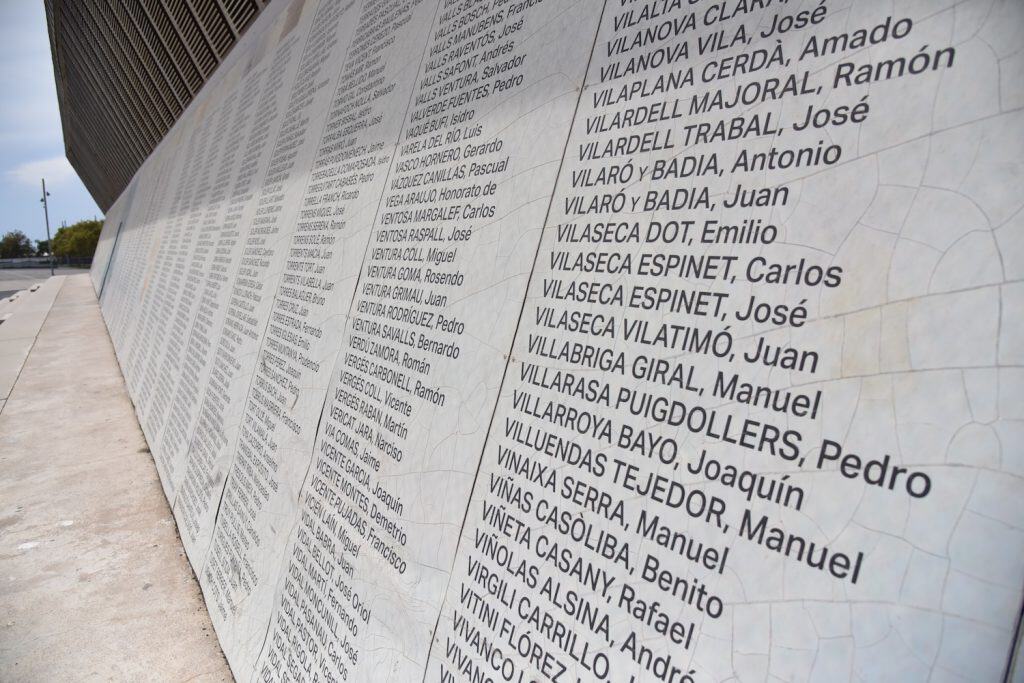
The Parapet de les executades i executats 1939-1952 is a 55-metre long memorial wall at the Parc del Fòrum, created by artist Francesc Abad and inaugurated in 2019. It bears the names of 1,706 people executed by the Franco regime in Barcelona between 1939 and 1952. The great majority of them were shot at Camp de la Bota and its form evokes the original execution wall, whose remains now lie beneath the sea.
1939–1975 – Franco’s Dictatorship
Cultural expression is suppressed, the Catalan language is banned from public life, and monuments are reinterpreted or erased. Rapid migration fuels uncontrolled growth, producing dense peripheral neighborhoods with little infrastructure.
1978–1992 – Democracy and Reinvention
***
Democracy returns, followed by a deliberate effort to reclaim public space. Neighborhoods are stitched back together, the waterfront is opened, and the 1992 Olympics reintroduce Barcelona to the world. The city becomes a global model for urban renewal.
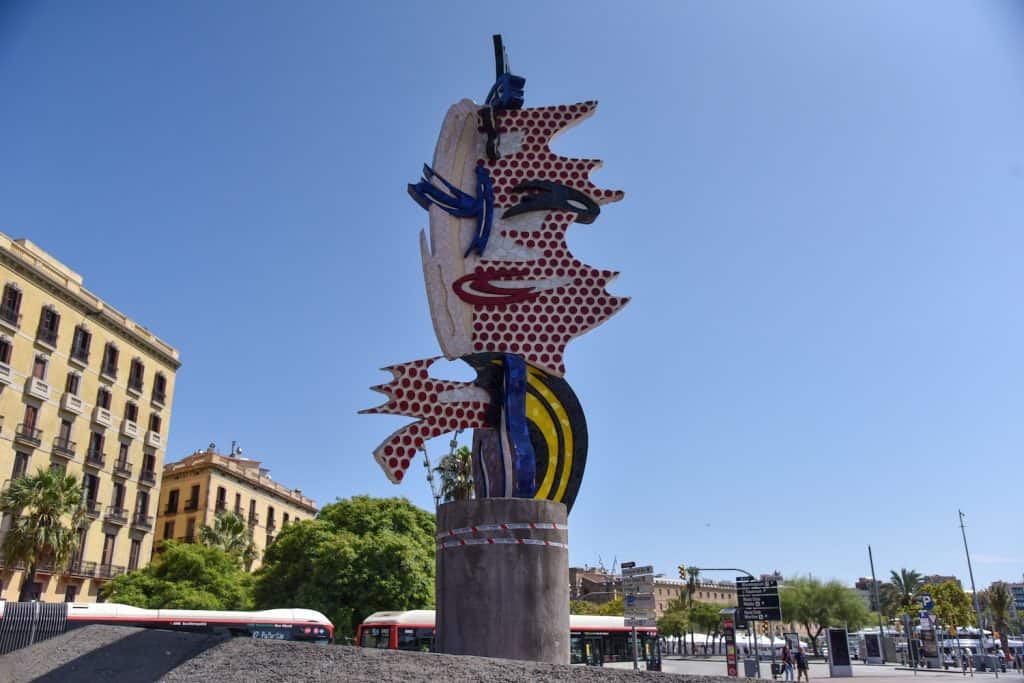
The sculpture pictured above, Cap de Barcelona (Barcelona Head) by Roy Lichtenstein, was commissioned by Barcelona City Council for the 1992 Olympic Games. You can see a nod to Antoni Gaudí, with the trencadis style mosaic used. Installed beside Port Vell, it was part of the wave of urban renewal that transformed Barcelona ahead of the games.
2000s–2010s – Tourism, Tension, and Transformation
Tourism reshapes housing, commerce, and daily life. While economic benefits flow in, tensions rise over affordability, identity, and sustainability. Barcelona begins to openly debate who the city is for.
2020s – Memory, Identity, and the Future
Today’s Barcelona is a city in conversation with itself. Debates over monuments, street names, housing, and language reflect a deeper reckoning with history. Rather than erasing the past, the city increasingly treats it as something to interpret, contest, and live alongside.
Barcelona, Read as a Timeline
Barcelona’s history isn’t confined to museums. It’s embedded in street grids, plaques, commemorations, and contradictions. From Roman ruins to Olympic boulevards, the city functions as a living archive.
🔗 Related Posts
Discover the people behind Barcelona most iconic addresses, from artists and explorers to politicians, saints, and other influential historical figures who helped shape the city’s history.
Think you know Catalonia’s past? Test your knowledge with our interactive quiz covering major historical events, famous figures, traditions, and the region’s rich cultural heritage.