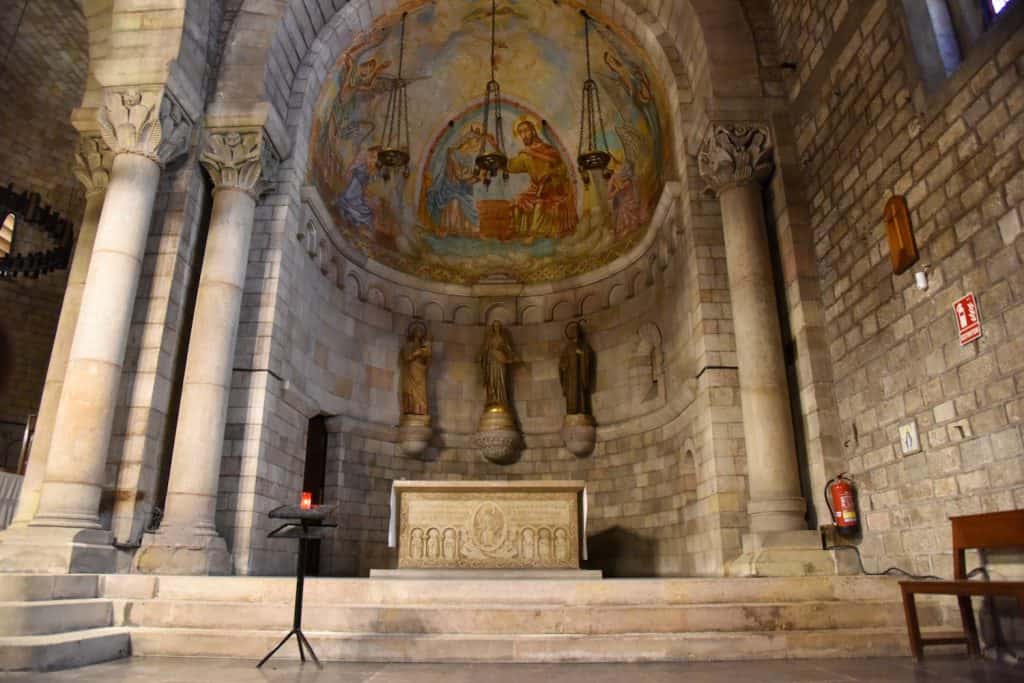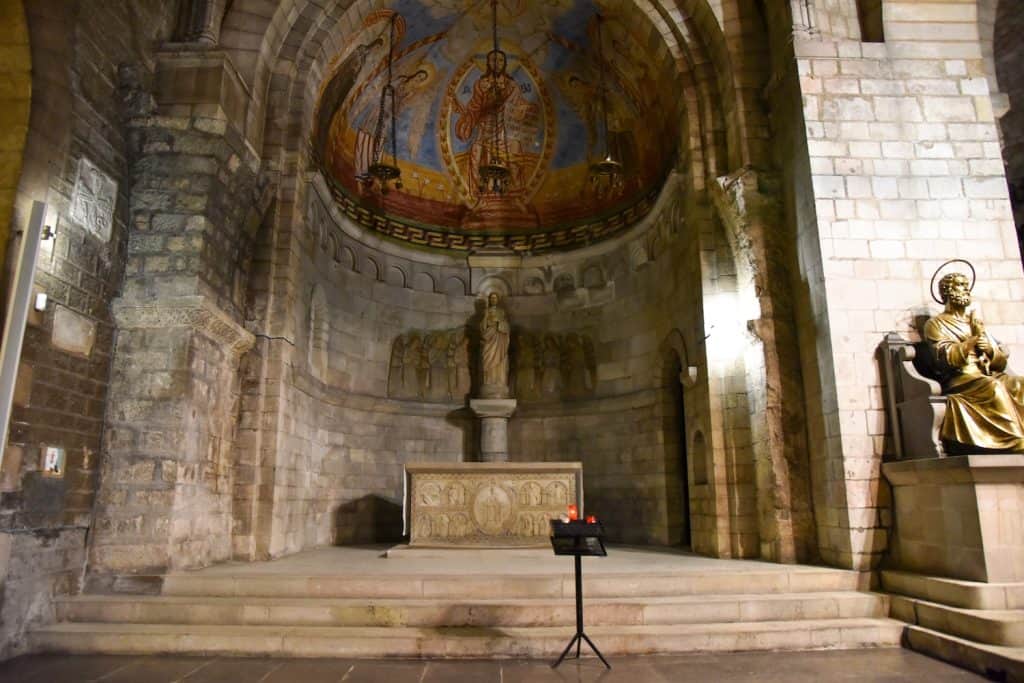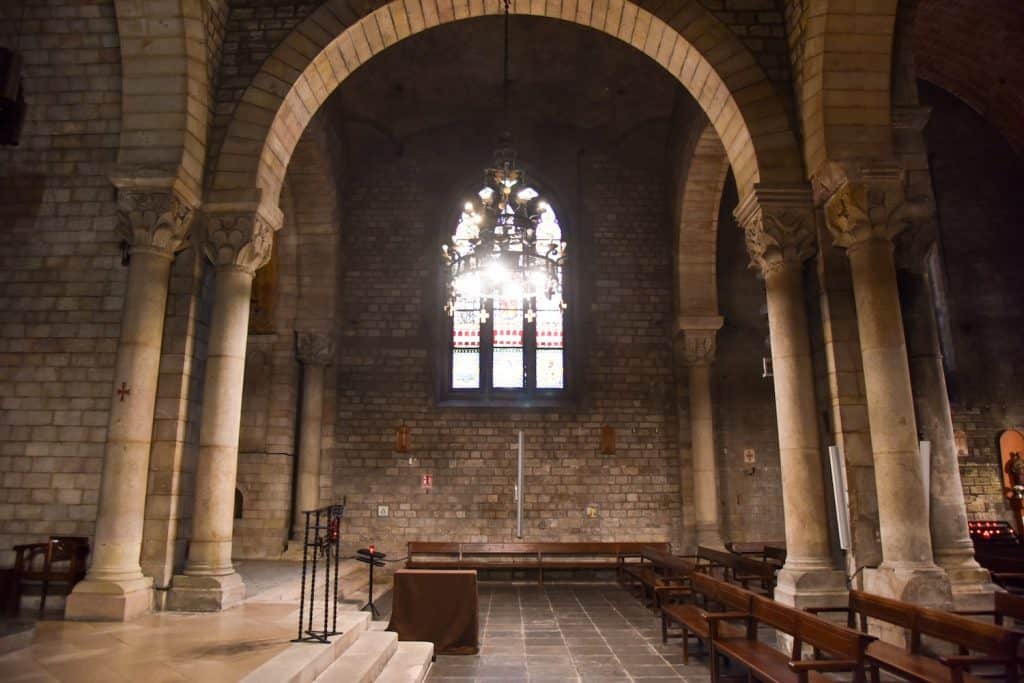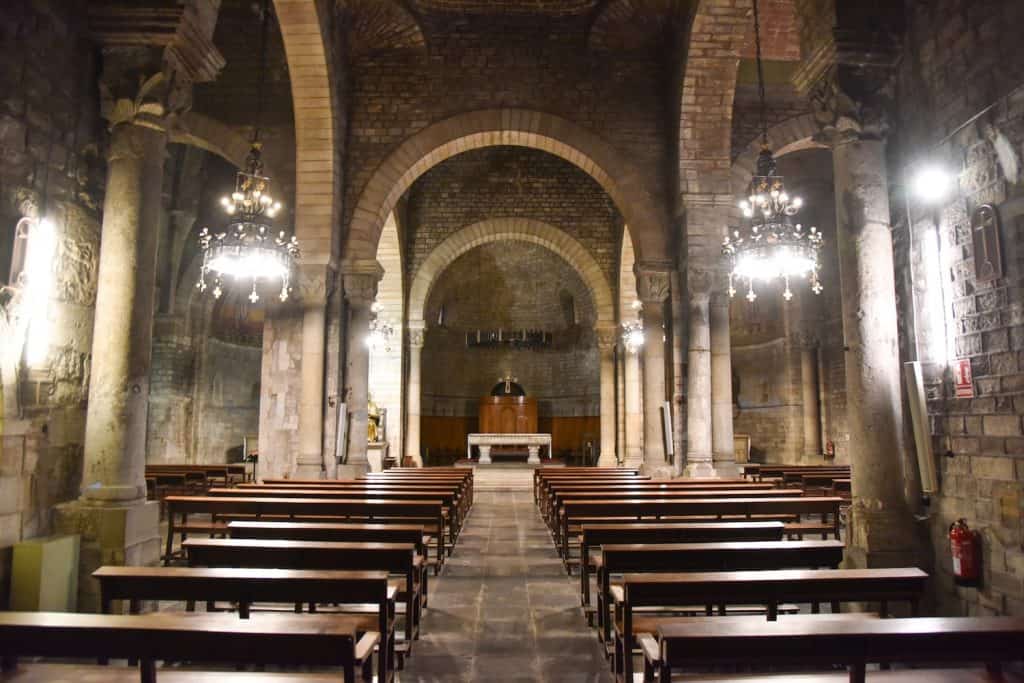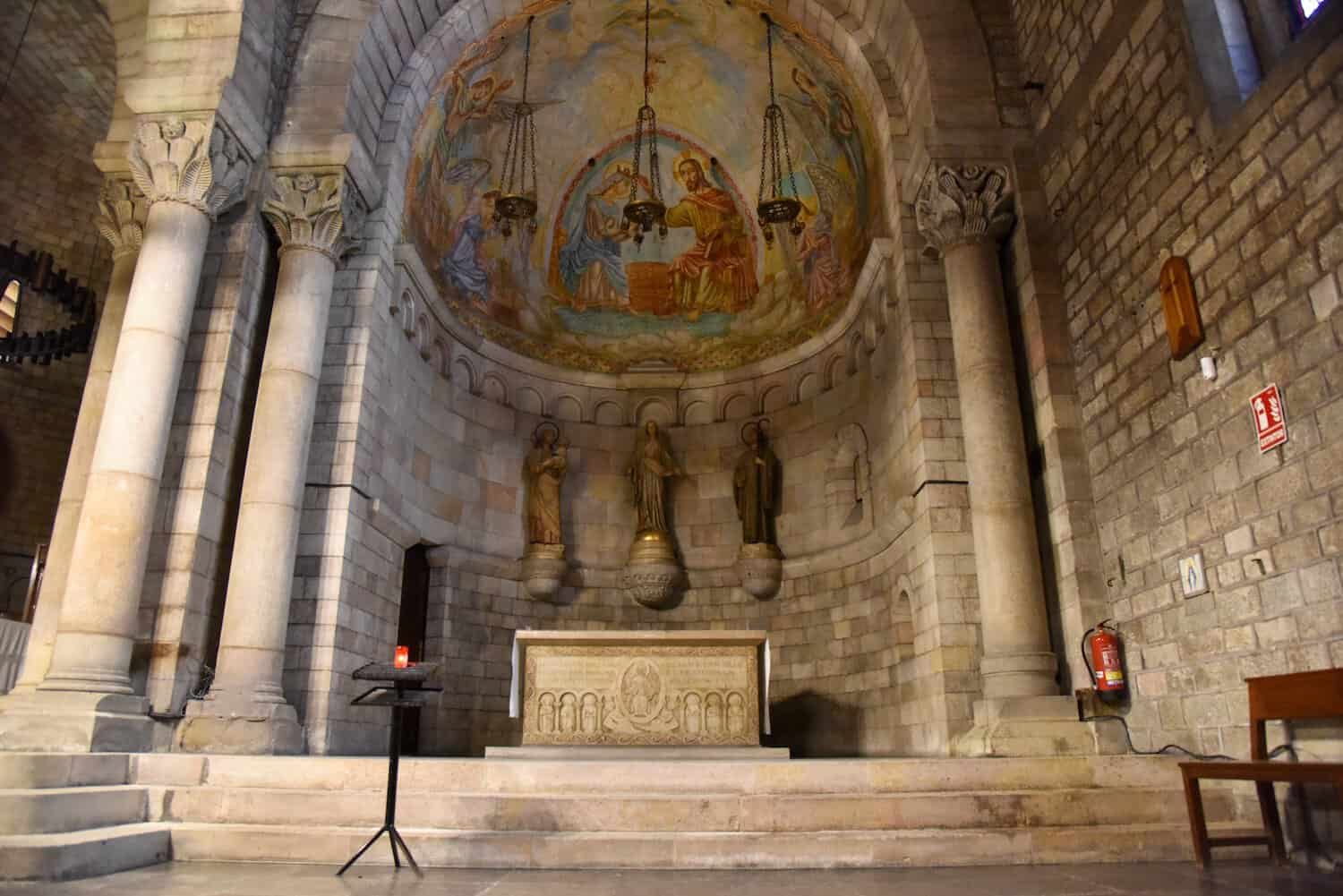
Sant Pere de les Puel·les is one of Barcelona’s oldest religious sites. Located in Plaça de Sant Pere in the Ciutat Vella district, the former Benedictine monastery gave its name to the surrounding Sant Pere neighborhood.
Although little remains of the original complex, the surviving church reflects centuries of destruction, rebuilding, and architectural changes. The building was declared a protected historic landmark in 1931.
More Than a Thousand Years of History
The Sant Pere neighborhood developed from the former settlement of Vilanova de Sant Pere, outside Barcelona’s medieval walls. The Benedictine convent was founded by Count Sunyer I of Barcelona, and his wife Riquilda. Its church was consecrated in 945, beside an older place of worship dedicated to Saint Saturninus.
Medival Prosperity and Destruction
The monastery enjoyed its greatest period of prosperity between the 12th and 15th centuries, benefiting from papal and royal protection. But it was repeatedly damaged by invasions, wars, and political upheaval.
The Benedictine community remained at Sant Pere for centuries. Following the confiscation of church property and the closure of the monastery in the 19th century, the nuns established a new convent in Sarrià in 1879.
The Earlier Carolingian Church
According to tradition, Louis the Pious, son of Charlemagne, ordered the construction of a small church dedicated to Saint Saturninus in 801.
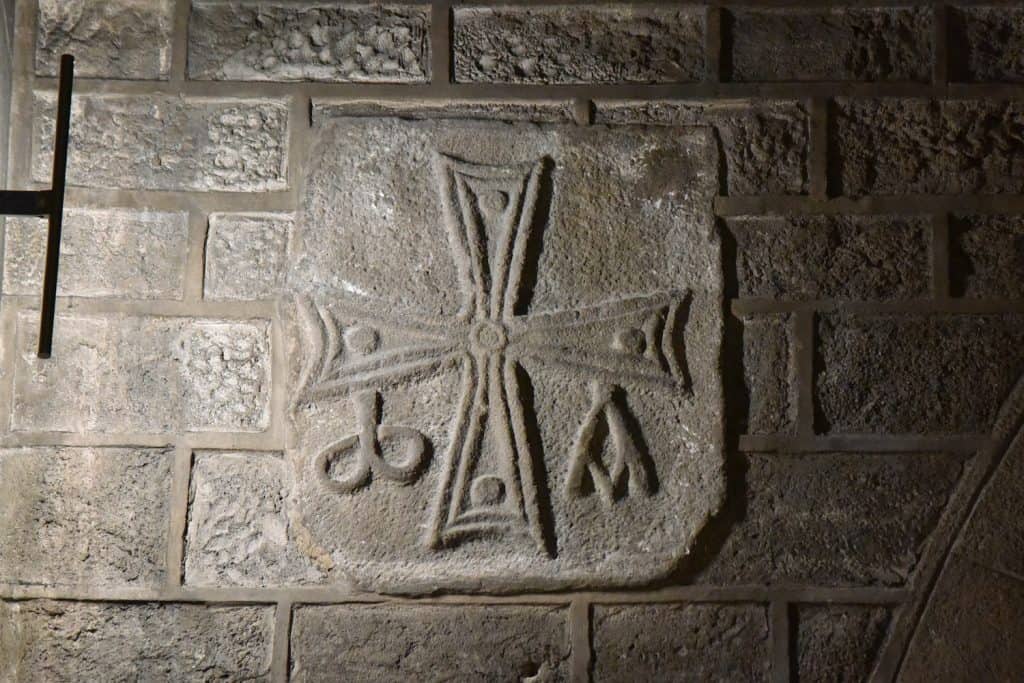
Several elements associated with this early pre-Romanesque building survive. These include a tombstone bearing the inscription obit era 891, sculpted imposts and stone reliefs of a cross and the Greek letters Alpha and Omega.
The Surviving Parish Church
The parish church is the only substantial part of the original monastery that remains, and centuries of destruction and reconstruction have greatly altered its appearance.
The medieval church is believed to have had a Greek-cross plan, with four equal arms arranged around a central space covered by a dome. At the end of the 19th century, Barcelona’s municipal authorities demolished the convent buildings and two-story cloister to make room for housing for the rapidly expanding city.
Later modifications transformed the church into its present three-nave layout. Its three semi/circular apses were created during an early-20th century restoration, replacing a polygonal Gothic choir supported by buttresses.
The Baptismal Font of Saint Joseph Oriol
One of the church’s most treasured features is the baptismal font where Saint Joseph Oriol was baptized in 1650. A much-loved Barcelona priest, he lived during a period of profound social, political, and economic upheaval. He was beatified by Pope Pius VII in 1806 and canonized by Pope Pius X in 1909.